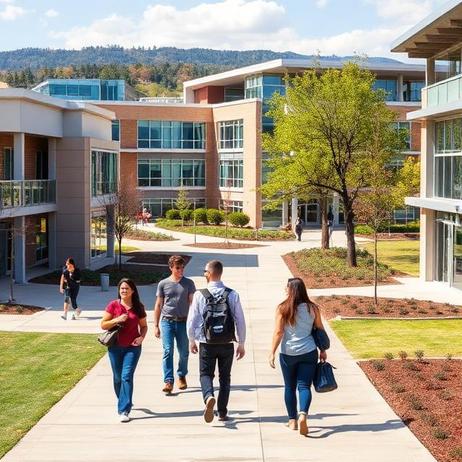
Community College News

Stay abreast of all the news and reports impacting community colleges. This section covers the latest news stories, from campus protests to Wal-Mart partnerships. Read community college reactions to the latest State of the Union address, identify schools receiving big donations, and analyze the latest laws impacting community colleges and their students.

View the most popular articles in Community College News:

What Is a Community College? 2026 Guide for Students

Updated
|
What Is a Community College? 2026 Guide for Students
Learn what a community college is, how it works, costs, programs, and benefits in this updated 2026 guide for students and families.

Understanding what a community college is has never been more important. As higher education costs continue to rise and career pathways diversify, community colleges are playing a central role in making education more accessible, flexible, and career-focused.

In 2026, community colleges are no longer viewed simply as “two-year schools.” They are dynamic institutions offering academic degrees, workforce training, transfer pathways, and increasingly, bachelor’s degree programs in select fields.

This guide explains what a community college is, how it works, and whether it may be the right choice for you or your student.

What Is a Community College?

A community college is a public, local institution of higher education that primarily offers two-year associate degrees, certificates, and workforce training programs. These schools are designed to serve the educational and economic needs of their surrounding communities.

Unlike traditional four-year universities, community colleges typically have:

  • Open or less selective admissions policies

  • Lower tuition costs

  • Flexible scheduling, including evening and online classes

  • Strong ties to local employers and industries

According to the National Center for Education Statistics, community colleges enroll nearly one-third of all undergraduate students in the United States, reflecting their broad appeal and accessibility.

Types of Programs Offered at Community Colleges

Community colleges offer a wide range of academic and career-focused programs. These generally fall into three main categories:

1. Associate Degree Programs

The most common credential is the associate degree, which typically takes two years to complete. Common types include:

  • Associate of Arts (AA)

  • Associate

. . .read more

Community Colleges A to Z: 2026 Complete Guide

Updated
Community Colleges A to Z: 2026 Complete Guide
Explore the 2026 A–Z guide to community colleges, covering admissions, costs, programs, and transfer pathways for students and families.

Community colleges continue to play a central role in American higher education. In 2026, they serve more than 10 million students nationwide, offering affordable, flexible, and career-focused pathways into the workforce or four-year institutions. This updated A to Z guide to community colleges provides a comprehensive overview for families, students, and educators navigating this increasingly dynamic sector.

Whether you are considering your first college experience, a career change, or a transfer pathway, understanding how community colleges operate is essential.

A–C: Access, Affordability, and Credentials

Access
Community colleges are known for open-access admissions policies. Most institutions accept all applicants with a high school diploma or equivalent, making them one of the most inclusive entry points into higher education.

Affordability
Cost remains one of the biggest advantages. According to the College Board, the average annual tuition for public two-year colleges is significantly lower than four-year institutions. Many states have expanded “last-dollar” scholarship programs in 2026, reducing or eliminating tuition for qualifying students.

For a deeper look at costs, see this guide on community college tuition and fees.

Credentials
Students can earn a range of credentials, including:

  • Associate of Arts (AA)
  • Associate of Science (AS)
  • Associate of Applied Science (AAS)
  • Certificates and industry certifications

These programs typically take two years or less to complete.

D–F: Dual Enrollment, Flexibility, and Financial Aid

Dual Enrollment
High school students can earn college credits early through dual enrollment programs. Participation has increased steadily, especially as states expand funding and partnerships between school districts and colleges.

Flexibility
Community

. . .read more

FAFSA Changes in 2026: What Community College Students Need to Know

Updated
|
FAFSA Changes in 2026: What Community College Students Need to Know
Learn how FAFSA changes in 2026 affect community college students, including eligibility, timelines, and financial aid updates.

For millions of students each year, the Free Application for Federal Student Aid (FAFSA) determines eligibility for grants, loans, and work-study programs. Community college students, in particular, rely heavily on federal aid to keep tuition affordable and reduce out-of-pocket costs.

Recent reforms to the FAFSA process continue to reshape how students apply for financial aid. Understanding FAFSA Changes in 2026: What Community College Students Need to Know can help students and families prepare early, avoid delays, and maximize financial aid eligibility.

This guide explains the most important updates, how they affect community college applicants, and what students should do now to stay ahead of the financial aid timeline.

Why FAFSA Matters for Community College Students

Community colleges are often considered the most affordable pathway into higher education. However, many students still depend on federal financial aid to cover:

  • Tuition and fees
  • Books and course materials
  • Transportation
  • Housing and living expenses

According to the National Center for Education Statistics, a large share of community college students receive some form of financial aid. Completing the FAFSA is the key step in accessing programs such as the Pell Grant, federal student loans, and work-study opportunities.

Students can learn more about federal student aid programs through the U.S. Department of Education’s official resource:
studentaid.gov

Because financial aid policies continue to evolve, understanding FAFSA Changes in 2026: What Community College Students Need to Know is especially important for first-time applicants and returning students alike.

A Simpler FAFSA Form

One of the

. . .read more

The Future of Community College: What It Means for Parents and Students

Updated
|
The Future of Community College: What It Means for Parents and Students
Explore The Future of Community College: What It Means for Parents and Students in 2026, including workforce programs, affordability, and transfer trends.

Community colleges have long served as an affordable, flexible gateway to higher education. In 2026, however, the conversation is shifting. Rapid technological change, employer partnerships, expanded transfer agreements, and new funding models are redefining expectations.

The Future of Community College: What It Means for Parents and Students is no longer simply about cost savings. It is about access to high-demand careers, stackable credentials, hybrid learning models, and a more direct connection between education and employment.

For families evaluating postsecondary options, understanding these changes is essential. Community colleges are evolving into agile workforce hubs, transfer pipelines, and lifelong learning centers, offering new opportunities and new considerations.

Enrollment Trends and the Post-Pandemic Reset

Community colleges experienced significant enrollment declines between 2020 and 2022. Since then, stabilization has occurred, particularly in career and technical education programs.

According to the National Center for Education Statistics, community colleges continue to serve millions of students annually, representing a substantial share of undergraduates nationwide. In 2026, growth areas include:

  • Healthcare and allied health programs

  • Advanced manufacturing and skilled trades

  • Information technology and cybersecurity

  • Early childhood and teacher preparation programs

Parents should note that enrollment rebounds have been strongest in career-focused programs tied to regional workforce needs. This signals a more employment-aligned future.

Workforce Alignment Is Driving the Model

One of the most

. . .read more

Community College Rankings by Category 2026

Updated
|
Community College Rankings by Category 2026
Explore the 2026 community college rankings by category, including affordability, transfer success, online programs, and workforce outcomes.

Community College Rankings by Category for 2026

Community colleges continue to evolve in response to workforce demands, student expectations, and affordability concerns. In 2026, community college rankings by category offer families and adult learners a more nuanced way to evaluate schools beyond simple graduation rates or enrollment figures.

Rather than focusing on a single, overall ranking, today’s leading evaluations compare institutions across categories such as affordability, transfer success, workforce outcomes, online education, and student support. This approach reflects the diverse missions of public two year colleges and the varied goals of the students they serve.

Below is a detailed look at the 2026 community college rankings by category, what they measure, and which institutions stand out nationally.

Why Category-Based Rankings Matter in 2026

Community colleges serve nearly one third of undergraduates in the United States, according to the National Center for Education Statistics. Their missions range from university transfer preparation to career and technical education, adult retraining, and dual enrollment for high school students.

Because missions vary, category-based rankings provide more meaningful insight. For example:

  • A student planning to transfer to a four-year university should prioritize transfer rates and articulation agreements.

  • An adult learner seeking rapid employment may focus on workforce placement and industry partnerships.

  • A family concerned about debt will examine tuition, net price, and financial aid accessibility.

If

. . .read more

Recent Articles

Test Article, Image and Content
Test Test Test Test Test Test Test Test Test Test Test Test Test Test Test Test Test Test Test Test Test Test Test Test Test Test Test Test Test Test Test Test Test Test Test Test Test Test Test Test Test Test Test Test Test Test Test Test Test Test Test Test Test Test Test Test Test Test Test Test Test Test Test Test Test Test Test Test Test Test Test Test Test Test Test Test Test Test Test Test Test Test Test Test Test Test Test Test Test Test Test Test Test Test Test Test Test Test Test Test Test Test Test Test Test Test Test Test Test Test Test Test Test Test Test Test Test Test Test Test Test Test Test Test Test Test Test Test Test Test Test Test Test Test Test Test Test Test Test Test Test Test Test Test Test Test Test Test Test Test Test Test Test Test Test Test Test Test Test Test Test Test Test Test Test Test Test Test Test Test Test Test Test Test Test Test Test Test Test Test Test Test Test Test
Faith Formation Integrated Across Subject Areas
Explore faith formation integrated across subject areas and its impact on curriculum, student outcomes, and community colleges.
Parish-Based Governance Models in Catholic Schools
Explore parish-based governance models in Catholic schools and their impact on leadership, funding, and community colleges.