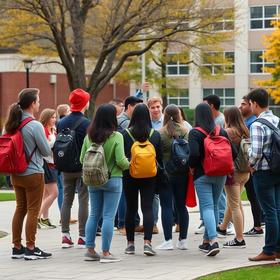

For many students, college has traditionally represented independence from family. However, a growing number of families are redefining that experience. Today, it is increasingly common for parents, especially mothers, to attend community college alongside their children.
What once felt unusual is now part of a broader shift toward multi-generational education, driven by economic pressures, workforce demands, and expanded access to flexible learning options.
Why More Families Are Attending College Together
The original rise of this trend was tied to economic factors. During periods of financial instability, many adults returned to school to gain new skills or transition careers, while their children chose more affordable community colleges.
That dynamic still exists today, but the trend has expanded due to several newer factors:
Key Drivers in 2024–2026
Rising tuition costs at four-year universities
- Growth of flexible and online learning options
- Increased demand for career-focused credentials
- Workforce shifts requiring upskilling and reskilling
Community colleges have become a natural meeting point for both generations, offering affordability, accessibility, and flexible scheduling.
👉 Learn more about cost advantages: https://www.communitycollegereview.com/blog/the-hidden-benefits-of-starting-at-a-community-college
The Growth of Student Parents in Community College
The “going to school with mom” trend is part of a larger demographic shift.
- About 4.8 million undergraduate students are parents, representing roughly one-quarter of all college students
- Approximately 2.1 million student parents attend community colleges
- Around one-third of women in community college are mothers, and many are single parents
These numbers highlight how community colleges increasingly serve not just recent high school graduates, but entire families navigating education together.
Benefits of Attending Community College with a Parent
While some students may initially hesitate at the idea, many families discover meaningful advantages.
1. Shared Support System
Parents and children can:
- Help each other with coursework
- Share study strategies
- Stay motivated together
In many cases, students report feeling more accountable and focused when a parent is also enrolled.
2. Stronger Family Bonds
Attending college together often strengthens relationships. Families spend more time collaborating, discussing ideas, and supporting each other’s goals.
This shared experience can transform education into a joint achievement rather than an individual milestone.
3. Role Modeling and Inspiration
Parents returning to school often set powerful examples.
Research shows that when mothers pursue higher education, their children’s academic performance and long-term outcomes often improve
Students frequently report feeling inspired by the discipline and persistence their parents demonstrate.
4. Financial and Logistical Benefits
Families attending the same college may benefit from:
- Shared transportation
- Coordinated schedules
- Reduced overall education costs
These practical advantages can make higher education more accessible for both generations.
Why Mothers Are Leading This Trend
Mothers represent a significant portion of returning adult students, particularly at community colleges.
Key motivations include:
- Career advancement or transition
- Increased earning potential
- Desire for personal fulfillment
- Need for financial stability
Women without college degrees often face higher unemployment rates and lower lifetime earnings, making education a critical pathway to stability
👉 Explore how community college compares to other pathways: Community College vs University Pros and Cons
Challenges of Going to School with Mom
Despite the benefits, this trend comes with real challenges.
Time and Role Strain
Student parents must balance:
- Coursework
- Childcare
- Work responsibilities
Research shows that mothers in college often experience time constraints and higher stress levels due to competing demands
Financial Pressures
Even with lower tuition, students may face:
- Childcare costs
- Reduced work hours
- Limited financial aid access
Many community colleges are responding with targeted support programs for student parents.
Social and Emotional Dynamics
Some students may initially feel uncomfortable sharing classes or campus spaces with a parent. However, many report that this concern fades over time as the benefits become clear.
How Community Colleges Are Supporting Student Parents
Colleges are increasingly adapting to meet the needs of multi-generational learners.
Common Support Services
On-campus childcare centers
- Flexible class schedules, including evening and online options
- Financial aid programs tailored to adult learners
- Academic advising for non-traditional students
These services make it easier for parents to succeed while balancing family responsibilities.
👉 See how flexible learning is evolving: https://www.communitycollegereview.com/blog/online-community-college-classes
A Broader Shift in Higher Education
The rise of parents and children attending college together reflects a deeper transformation in higher education.
Recent data shows:
- Community college enrollment is rebounding, with increases in both younger and adult learners
- Short-term credentials and career-focused programs are growing in popularity
- The definition of a “traditional student” continues to evolve
Education is no longer a one-time event; it is increasingly a lifelong process that families may experience together.
What This Means for Students
For students considering community college, this trend offers a new perspective.
Attending school with a parent can:
- Provide built-in support
- Reduce financial stress
- Create shared motivation
- Strengthen long-term outcomes
Rather than diminishing independence, many students find that this experience enhances their confidence and success.
Final Thoughts
The idea of going to college with a parent may once have seemed unconventional, but it is quickly becoming part of the new normal in community college education.
Driven by economic realities, workforce demands, and changing student demographics, multi-generational learning is reshaping what college looks like in 2026.
For many families, the journey through higher education is no longer taken alone; it is shared, collaborative, and ultimately more impactful for everyone involved.