
Updated
|
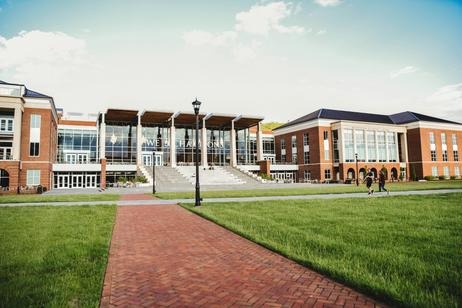
How California Community Colleges Are Raising Graduation Rates
In 2025, California community colleges double down on equity, guided pathways, and data-driven support to boost graduation and transfer rates.

The State of Graduation in 2025

When the original article was written, many observers questioned whether California’s community colleges could meet ambitious targets by 2020. Now, half a decade later, the system has not just confronted those doubts, but has evolved its strategy and the broader vision.

Enrollment and Demographic Trends

  • Enrollment has declined since the COVID-19 pandemic, placing pressure on revenue and student retention efforts.

  • Over 70 percent of California community college students come from racially and ethnically diverse backgrounds, underscoring the necessity of equity-focused reforms.

  • More than 1.8 million students enroll annually in the California Community Colleges (CCC) system.

Completion and Transfer Outcomes

  • Among first-time, full-time students in California community colleges, the average completion rate is approximately 42 percent (for the 2025–26 cohort).

  • For students who transfer to four-year institutions, outcomes have improved: a majority of CCC transfer students now graduate from CSU within four years (79 percent) and from UC within four years (90 percent).

  • CSU’s own Graduation Initiative 2025 has helped raise its systemwide four-year graduation rate for first-year students to about 35 percent (up from 19 percent when the initiative began).

  • Among transfer students

. . .read more

How Community Colleges Are Reinventing Enrollment in 2025

Updated
|
How Community Colleges Are Reinventing Enrollment in 2025
In 2025, community colleges adopt new enrollment strategies—dual enrollment, microcredentials, AI tools—to boost access, persistence, and growth.

Community Colleges Are Changing Strategies to Increase Enrollment (2025 Update)

Community colleges once viewed as the fallback option are stepping into the spotlight—reimagining how they recruit, retain, and serve students. In 2025, they are adopting new strategies informed by shifting demographics, funding pressures, evolving workforce demands, and technological innovation. Below is a refreshed look at how community colleges are changing strategies to increase enrollment, drawing on the latest data, examples, and expert insights.

Enrollment Trends in 2025: A Turning Tide?

After years of post-pandemic uncertainty and decline, community college enrollment is showing signs of recovery and renewed momentum. In spring 2025, total postsecondary enrollment rose 3.2 percent year over year, adding 562,000 students, with community colleges leading growth among undergraduate institutions.

From fall 2023 to fall 2024, community colleges saw a 3.9 percent increase in headcount, reaching about 10.5 million students, including both credit and noncredit enrollment. In many states, community colleges outpaced even four-year institutions: for example, North Carolina’s two-year colleges grew by 8.3 percent in spring 2025.

Moreover, transfer enrollment has surged: community colleges reported a 5.8 percent year-over-year increase in transfers, with 13.5 percent more transfer students than in 2020. Freshman enrollment at community colleges also outpaced other sectors, climbing 7 percent in 2024.

Still, the overall snapshot remains modest: undergraduate enrollment is about 2–3 percent below pre-pandemic levels overall, signaling that recovery is underway but not yet complete.

. . .read more

Is Your Community College Truly Top Ranked? (2025 Update)

Updated
|
Is Your Community College Truly Top Ranked? (2025 Update)
Discover what defines a top-ranked community college in 2025—cost, outcomes, equity, and rankings insights for students, parents, and educators.

Is Your Community College Truly Top Ranked? (2025 Update)

In 2025, the question “Is your community college top ranked?” carries new weight. The metrics that define a standout two-year institution have evolved—and so should the way students, families, and educators evaluate them. In this updated version of Is Your Community College Top Ranked?, we revisit the structure and logic of the original, infusing it with up-to-date data, policy shifts, and case studies. Our aim: help you assess whether a community college is truly among the best—and whether that ranking matters for your goals.

Why Rankings Still Matter (But Only if You Know Which Ones to Use)

Originally, many observers pointed to Washington Monthly’s rankings of community colleges as a high-visibility benchmark. That publication, using data including the Community College Survey of Student Engagement (CCSSE), remains influential. But in 2025, it competes with a wider array of rankings and accountability tools.

Today, the Aspen Prize for Community College Excellence stands out as a gold standard of peer-reviewed recognition. In October 2023, the Aspen Institute announced 150 institutions eligible for the 2025 Prize, based on improvements in retention, completion, transfer, and equity of outcomes. Achieving finalist status in the Aspen competition is often viewed by prospective students as a strong signal of institutional effectiveness.

Still, no ranking is perfect. Many colleges resist comparisons based solely on rankings. As the CCSSE has long warned, quantitative ranking systems can obscure

. . .read more

Seamless Transfers 2025: How to Navigate Community College → University

Updated
|
Seamless Transfers 2025: How to Navigate Community College → University
Learn the 2025 roadmap for community college students to transfer to universities—latest trends, credit strategies, and expert tips.

Seamless Transitions: Mastering the Community College to University Transfer Process (2025 Update)

For many students, the transition from community college to a four-year university is a critical turning point. In 2025, that pathway remains both full of opportunity and fraught with hurdles. This updated guide retains the original structure but integrates the latest data, policy shifts, and real-world insight to help students, parents, and educators navigate the community college → university transfer process more effectively.

1. Why Transfer Matters More Than Ever

In recent years, transfer activity has rebounded — and visibility into the process has improved. In fall 2024, nearly 1.2 million students transferred or entered a new institution, constituting about 13 percent of non-freshman undergraduates. Transfer enrollment grew by about 4.4 percent year over year. Clearinghouse Research Center+2The EDU Ledger

Institutions and policymakers are noticing. Many states are adopting structured transfer pathways and stronger articulation agreements to reduce barriers. Still, the obstacles students face—credit loss, misalignment of curricula, and administrative opacity—persist.

2. The Reality: Transfer Rates, Credit Loss, and Completion Gaps Low Transfer Completion Rates

Only about one-third of community college students ever transfer to a four-year institution. Of those who do transfer, fewer than half complete a bachelor’s degree within six years of starting at the two-year school.

These numbers are worse for historically underrepresented groups: low-income, Black, Hispanic, and older students all face even lower

. . .read more

Community College Success Stories Parents Should See

Updated
|
Community College Success Stories Parents Should See
Inspiring community college alumni stories and guidance—insights every parent should know about community college success.

Community College Success Stories Parents Should See

Community colleges often carry a misperception: that they are fallback options—or short-term stepping stones with limited outcomes. Yet, beneath the stereotypes lie rich stories of transformation, resilience, and generational change. For parents guiding teens or adult learners, the success stories of community college alumni offer powerful lessons and real-world proof of what’s possible.

This article highlights current (2025-2026) examples and themes, backed by data and expert insights, to help parents see community college not as second best—but as a viable pathway to long-term success.

Why Parents Should Pay Attention to Community College Paths

1. Cost-efficient and flexible

Community colleges generally offer far lower tuition than four-year institutions, making them attractive for families mindful of debt. They also offer high flexibility—night classes, hybrid formats, and part-time schedules—making them ideal for working students, parents, or those needing to balance other commitments.

2. Transfer and degree pathways

Many community colleges offer guaranteed or guided transfer agreements with four-year universities. These articulation agreements smooth the transition to bachelor's degree programs. Some also offer “university center” models so students can complete a four-year degree while staying on the community college campus. For example, Macomb Community College supports degree completion through its University Center model. (Wikipedia)

3. Career and technical education

Beyond transfer, community colleges often provide strong career and technical education (CTE). Alumni can emerge with industry-ready skills or certifications, ready to

. . .read more

Recent Articles

The Benefits of Community College Clubs in 2026
Discover how community college clubs boost success, skills, and connections for students in 2026.
What Is a Community College? 2026 Guide for Students
Learn what a community college is, how it works, costs, programs, and benefits in this updated 2026 guide for students and families.
What GPA Do You Need to Transfer to a University?
Learn the GPA needed to transfer from community college to a university, including requirements for top schools and tips to strengthen your application.