Updated
Community Colleges A to Z: 2026 Complete Guide
Explore the 2026 A–Z guide to community colleges, covering admissions, costs, programs, and transfer pathways for students and families.

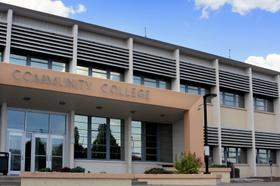
Community colleges continue to play a central role in American higher education. In 2026, they serve more than 10 million students nationwide, offering affordable, flexible, and career-focused pathways into the workforce or four-year institutions. This updated A to Z guide to community colleges provides a comprehensive overview for families, students, and educators navigating this increasingly dynamic sector.

Whether you are considering your first college experience, a career change, or a transfer pathway, understanding how community colleges operate is essential.

A–C: Access, Affordability, and Credentials

Access
Community colleges are known for open-access admissions policies. Most institutions accept all applicants with a high school diploma or equivalent, making them one of the most inclusive entry points into higher education.

Affordability
Cost remains one of the biggest advantages. According to the College Board, the average annual tuition for public two-year colleges is significantly lower than four-year institutions. Many states have expanded “last-dollar” scholarship programs in 2026, reducing or eliminating tuition for qualifying students.

For a deeper look at costs, see this guide on community college tuition and fees.

Credentials
Students can earn a range of credentials, including:

  • Associate of Arts (AA)
  • Associate of Science (AS)
  • Associate of Applied Science (AAS)
  • Certificates and industry certifications

These programs typically take two years or less to complete.

D–F: Dual Enrollment, Flexibility, and Financial Aid

Dual Enrollment
High school students can earn college credits early through dual enrollment programs. Participation has increased steadily, especially as states expand funding and partnerships between school districts and colleges.

Flexibility
Community
. . .read more

Top 10 Tips for New Community College Students in 2026

Updated
|
Top 10 Tips for New Community College Students in 2026
Discover the top 10 tips for new community college students in 2026, from academic success strategies to financial planning and campus engagement.

Starting community college is a major milestone, offering flexibility, affordability, and a direct pathway to career advancement or university transfer. In 2026, students face new opportunities and challenges, including expanded online learning options, evolving workforce demands, and increased emphasis on student support services.

For first-time students, success often depends on preparation, engagement, and informed decision-making. This guide outlines the top 10 tips for new community college students in 2026, helping you make the most of your experience from day one.

1. Start With a Clear Academic Plan

Before your first semester begins, meet with an academic advisor to map out your coursework. Whether your goal is to transfer to a four-year institution or enter the workforce quickly, having a structured plan prevents wasted time and credits.

Many colleges now offer guided pathways, which outline the exact sequence of courses needed for specific degrees. According to theNational Center for Education Statistics, students who follow structured academic plans are more likely to complete their programs on time.

If you are still undecided, explore general education tracks while taking introductory courses in potential fields of interest.

2. Take Advantage of Orientation Programs

Orientation is more than a formality. It introduces you to campus resources, faculty expectations, and student services that can shape your success.

In 2026, many colleges offer hybrid orientations that combine online modules with in-person sessions. These programs often cover:

  • Course registration systems
  • Financial aid processes
  • Campus technology platforms
  • Student support services

Students who actively participate

. . .read more

FAFSA Changes in 2026: What Community College Students Need to Know

Updated
|
FAFSA Changes in 2026: What Community College Students Need to Know
Learn how FAFSA changes in 2026 affect community college students, including eligibility, timelines, and financial aid updates.

For millions of students each year, the Free Application for Federal Student Aid (FAFSA) determines eligibility for grants, loans, and work-study programs. Community college students, in particular, rely heavily on federal aid to keep tuition affordable and reduce out-of-pocket costs.

Recent reforms to the FAFSA process continue to reshape how students apply for financial aid. Understanding FAFSA Changes in 2026: What Community College Students Need to Know can help students and families prepare early, avoid delays, and maximize financial aid eligibility.

This guide explains the most important updates, how they affect community college applicants, and what students should do now to stay ahead of the financial aid timeline.

Why FAFSA Matters for Community College Students

Community colleges are often considered the most affordable pathway into higher education. However, many students still depend on federal financial aid to cover:

  • Tuition and fees
  • Books and course materials
  • Transportation
  • Housing and living expenses

According to the National Center for Education Statistics, a large share of community college students receive some form of financial aid. Completing the FAFSA is the key step in accessing programs such as the Pell Grant, federal student loans, and work-study opportunities.

Students can learn more about federal student aid programs through the U.S. Department of Education’s official resource:
studentaid.gov

Because financial aid policies continue to evolve, understanding FAFSA Changes in 2026: What Community College Students Need to Know is especially important for first-time applicants and returning students alike.

A Simpler FAFSA Form

One of the

. . .read more

Best Community College Programs for High-Paying Jobs

Updated
|
Best Community College Programs for High-Paying Jobs
Explore the best community college programs for high-paying jobs without a bachelor’s degree, including healthcare, tech, and skilled trades.

For decades, a four-year college degree was widely considered the primary path to a high-paying career. In 2026, that assumption is rapidly changing. Rising tuition costs, workforce shortages in skilled fields, and the expansion of career-focused training programs have made community colleges a powerful gateway to well-paying jobs.

Many students are discovering that the Best Community College Programs for High-Paying Jobs Without a Bachelor’s Degree can lead to stable careers in healthcare, technology, engineering, and skilled trades, often within two years or less. These programs emphasize hands-on training, industry certifications, and direct connections with employers.

According to theU.S. Bureau of Labor Statistics, several occupations requiring only an associate degree or postsecondary certificate offer median salaries above the national average and strong projected job growth.

This guide explores some of the most promising community college programs that can lead to high-paying careers without the time and financial investment of a four-year degree.

Why Community College Career Programs Are Growing in Popularity

Community colleges have long offered affordable education, but their role in workforce preparation has expanded significantly in recent years.

Several factors are driving this trend:

  • Lower cost: Community college tuition remains dramatically lower than four-year universities.
  • Faster entry into the workforce: Many programs take 18–24 months.
  • Industry partnerships: Colleges increasingly design programs with employer input.
  • Stackable credentials: Certificates can build toward advanced qualifications later.

In many cases, graduates leave with both an associate degree and industry certifications, making them immediately competitive in the job market.

. . .read more

Why 60% of Community College Students Never Transfer in 2026

Updated
|
Why 60% of Community College Students Never Transfer in 2026
Explore why 60% of community college students never transfer to four-year universities and what students, families, and colleges can do in 2026.

Community colleges remain one of the most accessible entry points into higher education. Nearly four in ten U.S. undergraduates attend a community college, attracted by affordable tuition, flexible scheduling, and open admissions policies. Many begin with the goal of eventually earning a bachelor’s degree.

Yet the reality of the transfer pipeline tells a more complicated story. Research consistently shows that a majority of students who start at community colleges never make it to a four-year institution. In many regions, roughly 60% of community college students who intend to transfer never complete the process.

Understanding why 60% of community college students never transfer requires looking beyond simple statistics. Structural barriers, advising gaps, financial pressures, and policy inconsistencies all play a role in shaping outcomes.

This article explores the major factors behind low transfer rates and highlights what students, families, and colleges can do to improve the pathway to a four-year degree.

The Transfer Pathway: A Promising but Difficult Route

The “2+2” pathway, two years at a community college followed by two years at a university, is widely promoted as a cost-effective strategy for earning a bachelor’s degree.

According to the National Student Clearinghouse Research Center, only about 31.6% of students who begin at community colleges successfully transfer to a four-year institution within six years. Even among those who do transfer, fewer than half earn a bachelor’s degree in that timeframe.

This gap between aspiration and reality is striking. Surveys suggest that as many as 80% of incoming community college

. . .read more

Recent Articles

Test Article, Image and Content
Test Test Test Test Test Test Test Test Test Test Test Test Test Test Test Test Test Test Test Test Test Test Test Test Test Test Test Test Test Test Test Test Test Test Test Test Test Test Test Test Test Test Test Test Test Test Test Test Test Test Test Test Test Test Test Test Test Test Test Test Test Test Test Test Test Test Test Test Test Test Test Test Test Test Test Test Test Test Test Test Test Test Test Test Test Test Test Test Test Test Test Test Test Test Test Test Test Test Test Test Test Test Test Test Test Test Test Test Test Test Test Test Test Test Test Test Test Test Test Test Test Test Test Test Test Test Test Test Test Test Test Test Test Test Test Test Test Test Test Test Test Test Test Test Test Test Test Test Test Test Test Test Test Test Test Test Test Test Test Test Test Test Test Test Test Test Test Test Test Test Test Test Test Test Test Test Test Test Test Test Test Test Test Test
Faith Formation Integrated Across Subject Areas
Explore faith formation integrated across subject areas and its impact on curriculum, student outcomes, and community colleges.
Parish-Based Governance Models in Catholic Schools
Explore parish-based governance models in Catholic schools and their impact on leadership, funding, and community colleges.